


 Garden Suites
 Basement Reno
 Bathroom Reno
Last updated: August 2026.
If you are asking about the garden suite bylaws in Etobicoke, here is the short version: Etobicoke follows the City of Toronto rules for garden suites, so your project is governed by the citywide zoning bylaw and the garden suite zoning amendment, not a separate Etobicoke code. That means a clear set of limits on height, size, setbacks, and how far the suite sits from the main house. Once you know those numbers, you can tell pretty quickly whether your backyard qualifies. Our garden suite builders in Etobicoke walk owners through this every week.
Below is a plain-language tour of the main rules, where they come from, and the points that most often trip up first-time builders. Treat it as a map, then confirm the exact figures for your lot before you spend a dollar on drawings.
Permit and zoning note: This article is general information, not legal, zoning, or building-code advice. Zoning bylaws, the Ontario Building Code, and municipal permit rules change and are applied to each property on its own facts. Always confirm the current requirements with your municipality and a qualified designer, planner, or contractor before you commit to a project. Deomax Group is not responsible for outcomes from actions taken based on this content.
In this article
What counts as a garden suite in Etobicoke
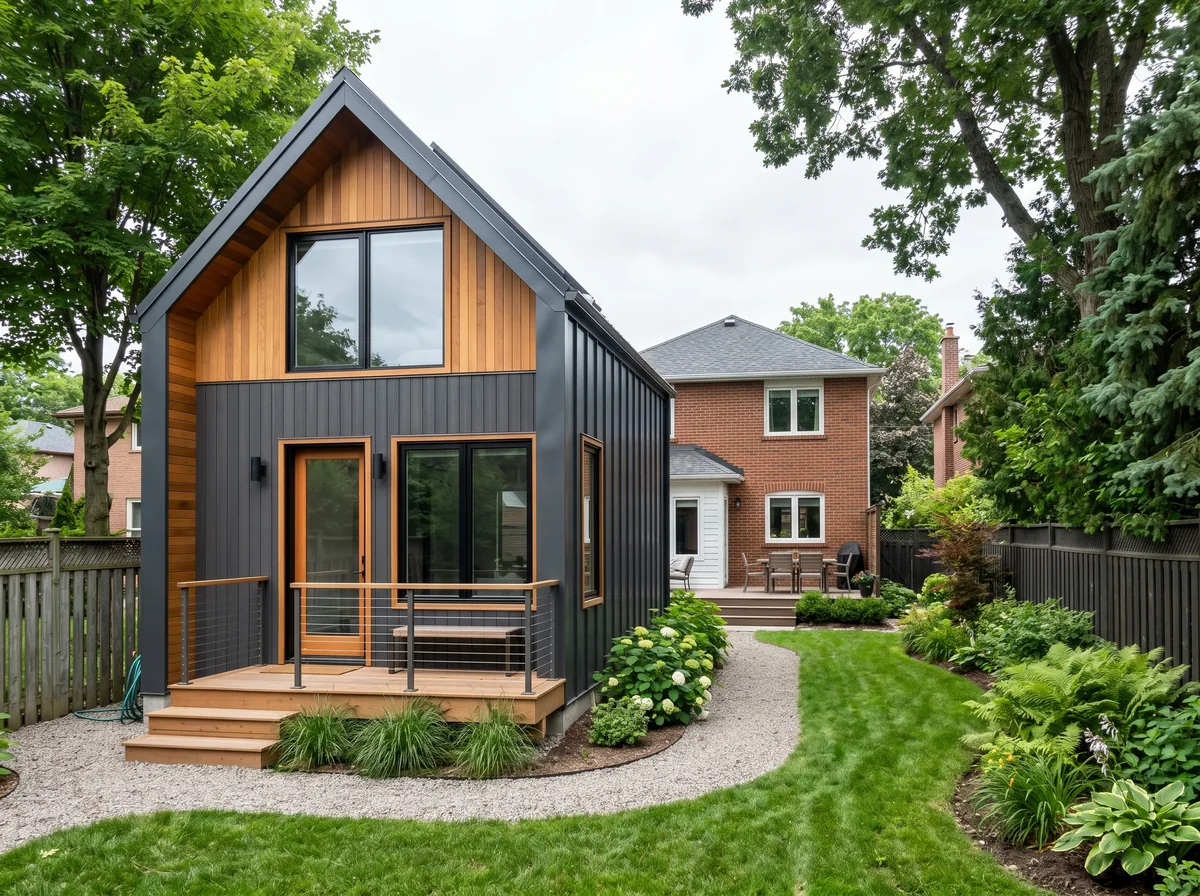
A garden suite is a detached, self-contained living unit in the rear yard of a lot that already has a house on it. It has its own kitchen, bathroom, and sleeping area, and it is meant to be lived in year-round. That is what separates it from a shed, a studio, or a pool house.
People often mix up garden suites and laneway suites. The difference is access. A laneway suite faces a public lane behind the property, while a garden suite sits in a backyard with no lane behind it. Most of Etobicoke is laid out without rear lanes, which is exactly why the garden suite rules matter so much here. If you want the full comparison, our team also builds laneway and coach houses in Etobicoke.
Did you know: garden suites are legal across Toronto
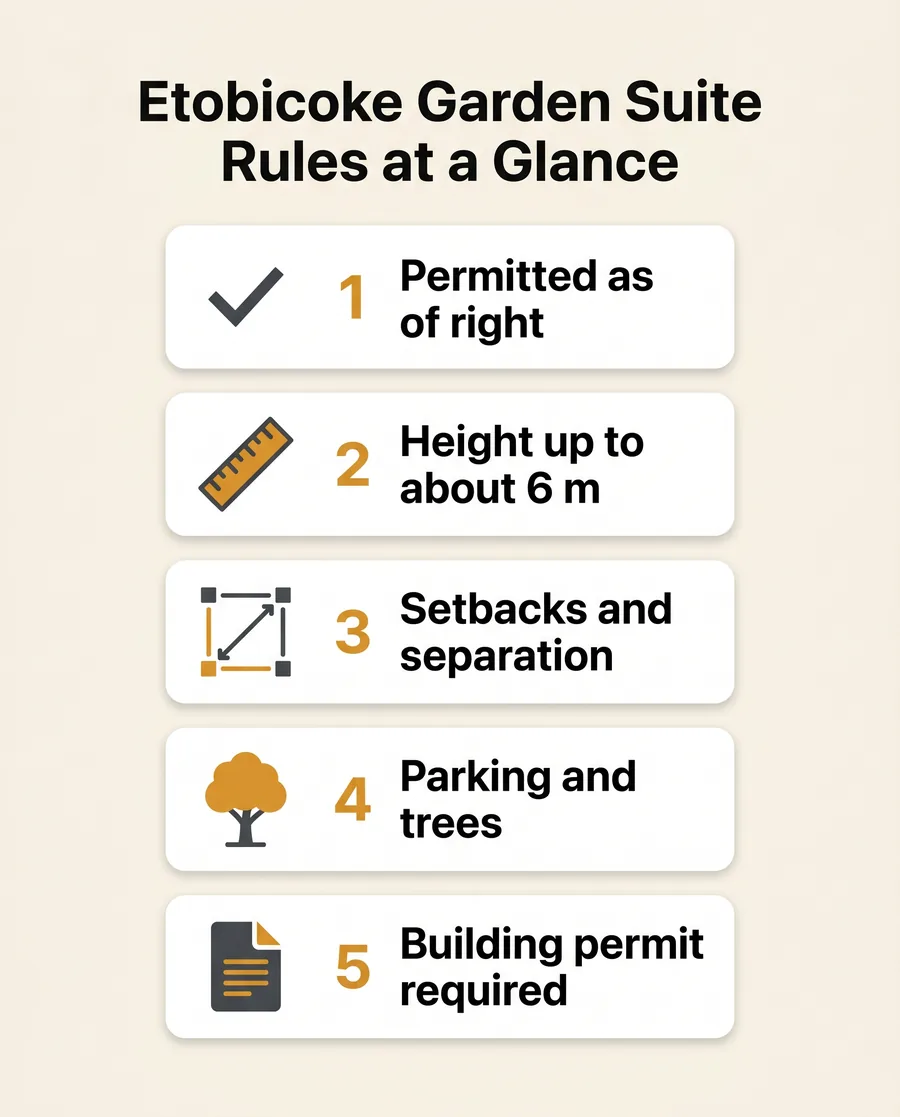
Toronto adopted citywide garden suite rules in 2022, which means a garden suite is permitted as of right in most residential zones, including the former City of Etobicoke, as long as it meets the standards. “As of right” means you do not need a special rezoning if you stay inside the limits. You can read the City’s own overview on the City of Toronto garden suites page.
Where the rules actually come from
Three documents control your project. Understanding which one does what saves a lot of confusion when you start reading conflicting advice online.
- The citywide Zoning By-law (569-2013). This sets the base rules for your lot, including what zone you are in. You can look up your property and confirm the zoning through the City of Toronto zoning bylaw review service.
- The garden suite zoning amendment. This is the layer that permits garden suites and sets the specific standards for height, size, setbacks, and separation discussed below.
- The Ontario Building Code. Zoning decides whether you can build and how big. The Building Code decides how it must be built: fire separation, insulation, egress, plumbing, and structure. You need a permit that satisfies both.
People often ask: do I need a minor variance for a garden suite?
Not always. If your design stays within every garden suite standard, the suite is allowed as of right and you go straight to a building permit. You only need a minor variance through the Committee of Adjustment when one or more numbers fall outside the limits, for example a suite slightly taller or closer to a lot line than the bylaw allows. A variance adds months and is never guaranteed, so most owners design to fit the rules from the start.
Size, height, and how big you can build
These are the numbers owners ask about first. The exact figures depend on your lot size and the distance between the main house and the suite, but the framework looks like this.
Pricing note: Any figures on this page reflect typical 2026 conditions in Mississauga, Toronto, Milton, and Etobicoke. What a project actually costs depends on the property, the scope, site access, material choices, and the approvals required. Always get a written quote and a site assessment before you budget or build.
| Standard | Typical limit under Toronto garden suite rules | Why it exists |
|---|---|---|
| Maximum height | Generally up to about 6 m, with reductions near lot lines | Protects neighbours from overlook and shadow |
| Footprint and floor area | Tied to lot size and rear yard area | Keeps the suite secondary to the main house |
| Number of storeys | Commonly one to two storeys | Scales with height and separation distance |
| Soft landscaping | A minimum share of the rear yard must stay permeable | Manages stormwater and green space |
Notice that height and size are not single fixed numbers. They flex with how far the suite sits from the rear and side lot lines and from the main house. The more separation you give, the more you can usually build. That is why two neighbours with the same lot width can end up with very different suites.
Setbacks, separation, and angular planes
Please note: The guidance here is general and is not a substitute for professional advice. Construction, structural, and permit decisions depend on your specific property and the current rules in your municipality. Deomax Group is not liable for any cost, delay, or damage resulting from action taken based on this content. When a step calls for structural work, permits, or trades you are not licensed for, bring in a qualified professional.
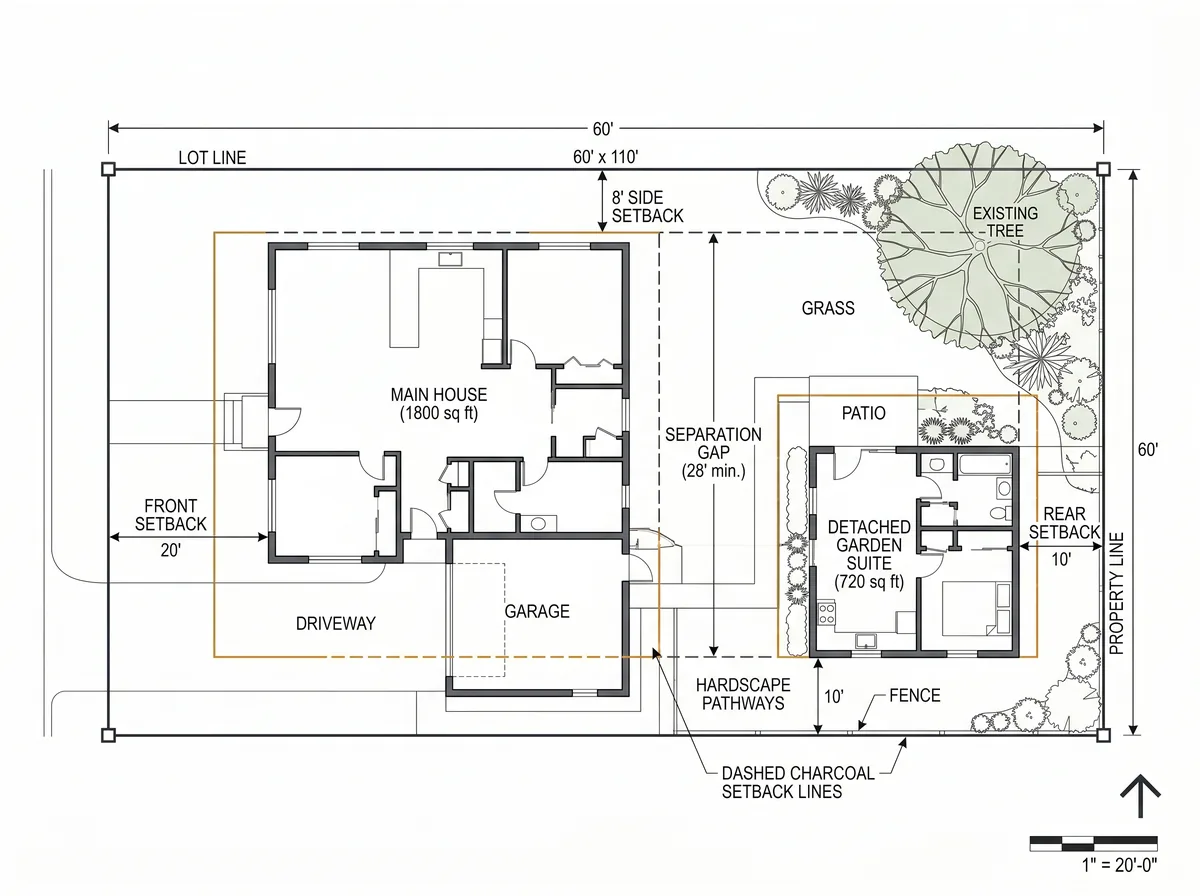
Setbacks are the gaps you must leave between the garden suite and the property lines. Separation is the gap between the suite and the main house. Both protect light, privacy, and emergency access, and both are where designs most often need fine-tuning.
- Rear and side setbacks. The suite must sit a set distance off the rear and side lot lines. Corner lots and unusually shaped lots have their own adjustments.
- Separation from the main house. A minimum distance keeps the two buildings from feeling like one structure and gives firefighters access between them.
- Angular plane. An invisible sloped line measured from the lot lines caps how tall the suite can be near its edges, so upper walls step in as they rise. This is the rule that most often reshapes a second-storey design.
Red flag: do not assume your neighbour’s suite sets your limit
Just because a garden suite went up two doors down does not mean yours can match it. Lot depth, width, mature trees, existing structures, and the exact zone all change the math. A suite that was legal on one lot can be over the limit on yours. Always have the standards checked against your specific property survey before you fall in love with a floor plan.
Parking, trees, and servicing
Three practical conditions decide whether a backyard that looks big enough on paper actually works.
- Parking. Toronto removed minimum parking requirements for garden suites in many cases, which made far more lots viable. You still have to keep any legally required parking for the main house and maintain a clear path for emergency access.
- Trees. Protected and city-owned trees can stop a project cold. If a mature tree sits where you want to build, you may need a tree protection plan or an arborist report, and removal is not always approved.
- Servicing. The suite needs water, sewer, and electrical service. Running these from the street or the main house through the backyard adds cost and sometimes drives the final position of the building.
People often ask: how close to the lot line can the suite go?
It depends on the lot line and the wall height facing it, but garden suites must leave a real buffer, not just a few centimetres. Walls and windows facing a rear or side line are the most restricted, because they affect a neighbour’s light and privacy. The safest move is to confirm the exact setback for each side of your lot through a zoning review before your designer locks the footprint.
The approval path, step by step
Here is the route a compliant Etobicoke garden suite typically follows, from idea to keys.
- Confirm your zoning and that a garden suite is permitted on your lot.
- Get a current survey, then have a designer prepare drawings that meet every standard.
- Apply for a building permit through the City of Toronto building permit process.
- Resolve any tree, servicing, or conservation conditions.
- If anything falls outside the rules, apply to the Committee of Adjustment for a minor variance.
- Build, pass inspections, and get occupancy.
Where projects get stuck
- Skipping the zoning check. Designing first and checking the rules later is the most expensive mistake. Confirm the standards for your lot before drawings begin.
- Ignoring trees. A protected tree can force a smaller suite or a different position. Find out early.
- Underestimating servicing. Water, sewer, and power runs across a backyard are real costs that owners often forget.
- Chasing a variance unnecessarily. If a small redesign keeps you within the rules, that is almost always faster and cheaper than a Committee of Adjustment hearing.
Sources and further reading
- City of Toronto, Garden Suites planning study and overview.
- City of Toronto, Zoning By-law review and verification service.
- City of Toronto, Building permit application process.
- Government of Ontario, Ontario Building Code (O. Reg. 332/12).
- Deomax Group, in-house experience building garden and laneway suites across the GTA.
Frequently asked questions
Your next move
A garden suite in Etobicoke is very doable, but only when the design respects the rules from day one. Before you commission drawings, run this short checklist:
- Confirm your zone and that a garden suite is permitted on your lot.
- Order a current survey and note any protected trees.
- Check the height, setback, and separation limits for your specific property.
- Map out water, sewer, and electrical runs to the backyard.
- Decide whether your dream design fits the rules or needs a variance.
Download the free quick guide
A printable one-page checklist of the zoning standards and approval steps to confirm before you build in Etobicoke.
Thinking about a garden suite in Etobicoke?
Deomax Group designs and builds garden and laneway suites across the GTA, and we handle the zoning and permit side so you do not have to guess. See our Etobicoke garden suite service, browse recent projects, or book a free consultation and we will tell you what your backyard can support.
 Interior Renos