


 Garden Suites
 Basement Reno
 Bathroom Reno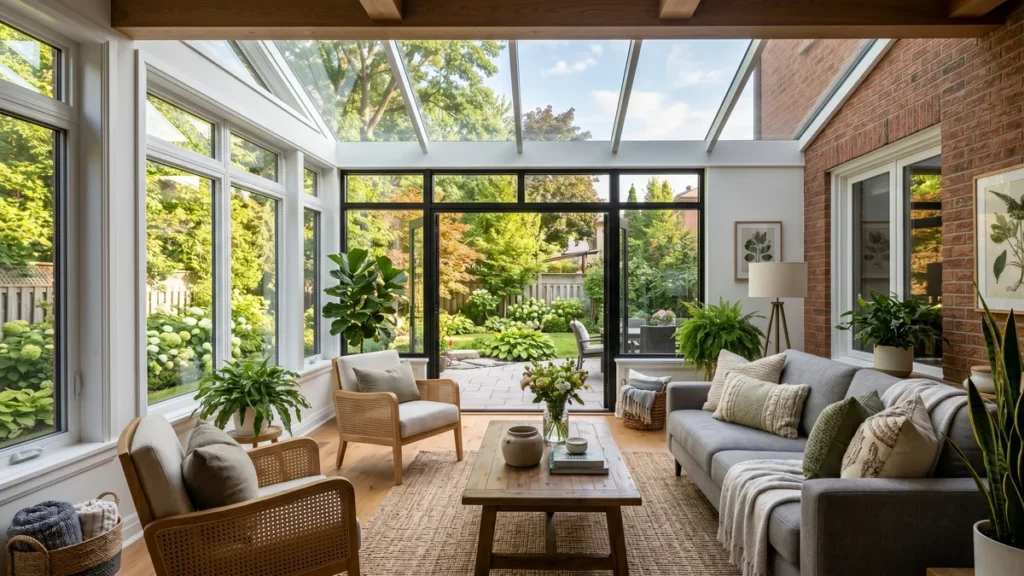
Last updated: September 2026.
Table of Contents
- What Is the Difference Between Three-Season and Four-Season?
- Three-Season Sunrooms: Pros, Cons, and Cost
- Four-Season Sunrooms: Pros, Cons, and Cost
- Insulation and Glazing: The Technical Differences
- Permit Requirements Across the GTA
- Which Option Is Right for Your Home?
- Working With a Contractor on Your Sunroom Project
A sunroom addition is one of the most appealing home improvement projects for GTA homeowners, and one of the most likely to create confusion between two very different product categories. The terms three-season and four-season get used loosely, but they describe fundamentally different structures with different costs, permits, and year-round utility. Making the wrong choice is not a small mistake – it means living with a space that is either too cold in November or too expensive for how you actually use it.
If you have decided which type you want, our sunroom additions page covers cost, permits and the build process across the GTA.
What Is the Difference Between Three-Season and Four-Season?
The core difference is thermal performance. A three-season sunroom is designed for comfortable use from roughly late April through October in the GTA climate – it is not insulated to withstand Ontario winters comfortably or economically. A four-season sunroom is built to the same insulation and thermal performance standards as the interior of your home, meaning it is usable year-round as heated living space.
This difference cascades through every aspect of the project: foundation depth, wall and roof R-values, glazing specification, mechanical systems, and permit classification. It also cascades through the cost – four-season sunrooms typically cost 50 to 100 percent more than three-season rooms of comparable size.
Three-Season Sunrooms: Pros, Cons, and Cost
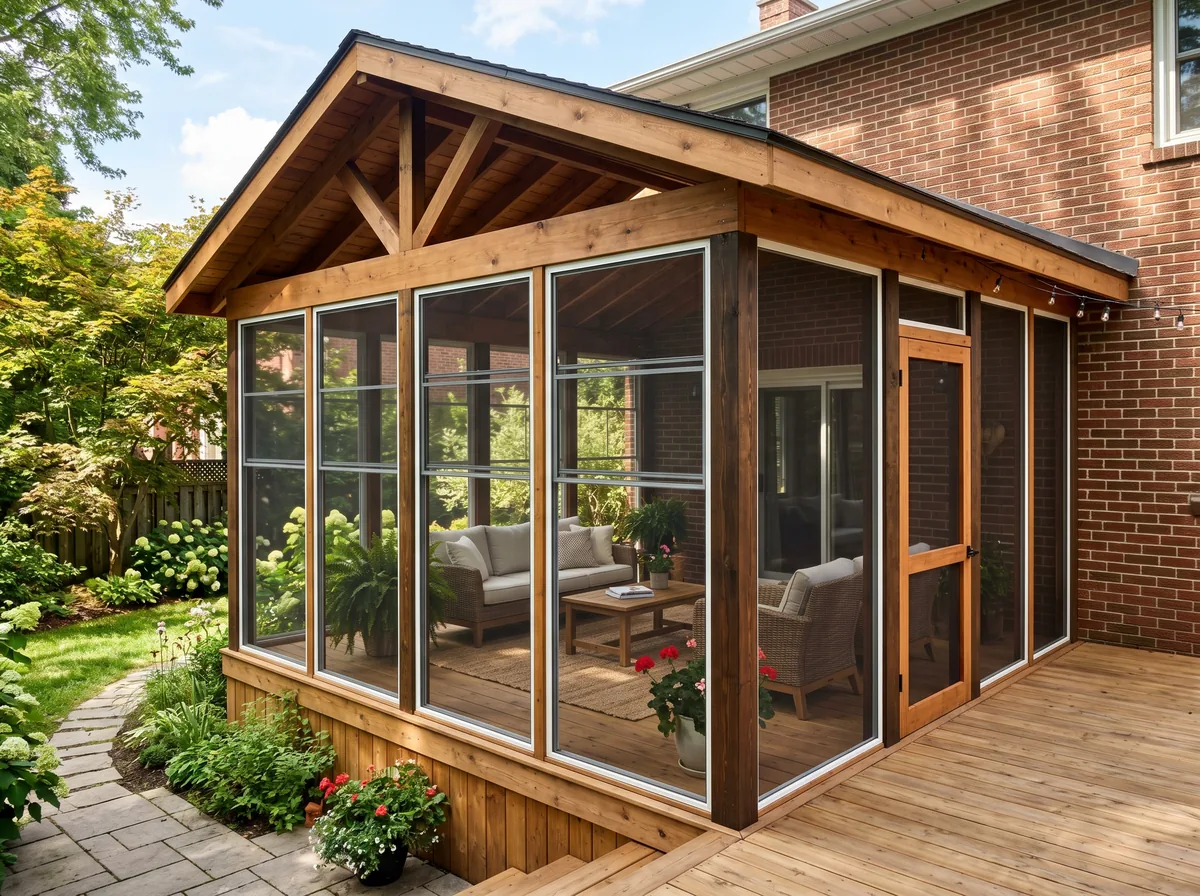
A three-season sunroom is typically built on a floating slab or deck-level foundation, with aluminum-framed walls using single or basic double-pane glass or screened panels, and a lightweight roof system. There is no dedicated heating system. In the GTA climate, this gives you comfortable use from May to October – a full six months.
The advantages of a three-season room: lower construction cost, simpler permit classification, faster construction timeline, and lower long-term energy cost since you are not heating it through winter. Many GTA homeowners use them as dining rooms through summer, reading rooms in shoulder seasons, and storage spaces in winter – and are completely satisfied.
The limitations are real. A three-season room in January is cold – unusable without a portable heater, and uncomfortable even with one because of heat loss through uninsulated glazing. Cost range for a 200 to 350 sq ft three-season sunroom in the GTA: $35,000 to $75,000.
Four-Season Sunrooms: Pros, Cons, and Cost
A four-season sunroom is built as genuine habitable space. This means a full frost-depth foundation (perimeter footing or piers to below the frost line, which in the GTA is 1.2 to 1.5 metres), insulated walls to OBC energy code standards (minimum R-20 effective for most GTA municipalities), triple-pane glazing, and a dedicated heating and cooling system.
A well-built four-season sunroom is indistinguishable from other interior rooms in terms of comfort in January or August. It adds formal square footage to your home for appraisal purposes. Cost: $75,000 to $180,000 for a 200 to 400 sq ft addition. Premium builds with heated floors and high-end glazing can exceed $200,000.
Insulation and Glazing: The Technical Differences
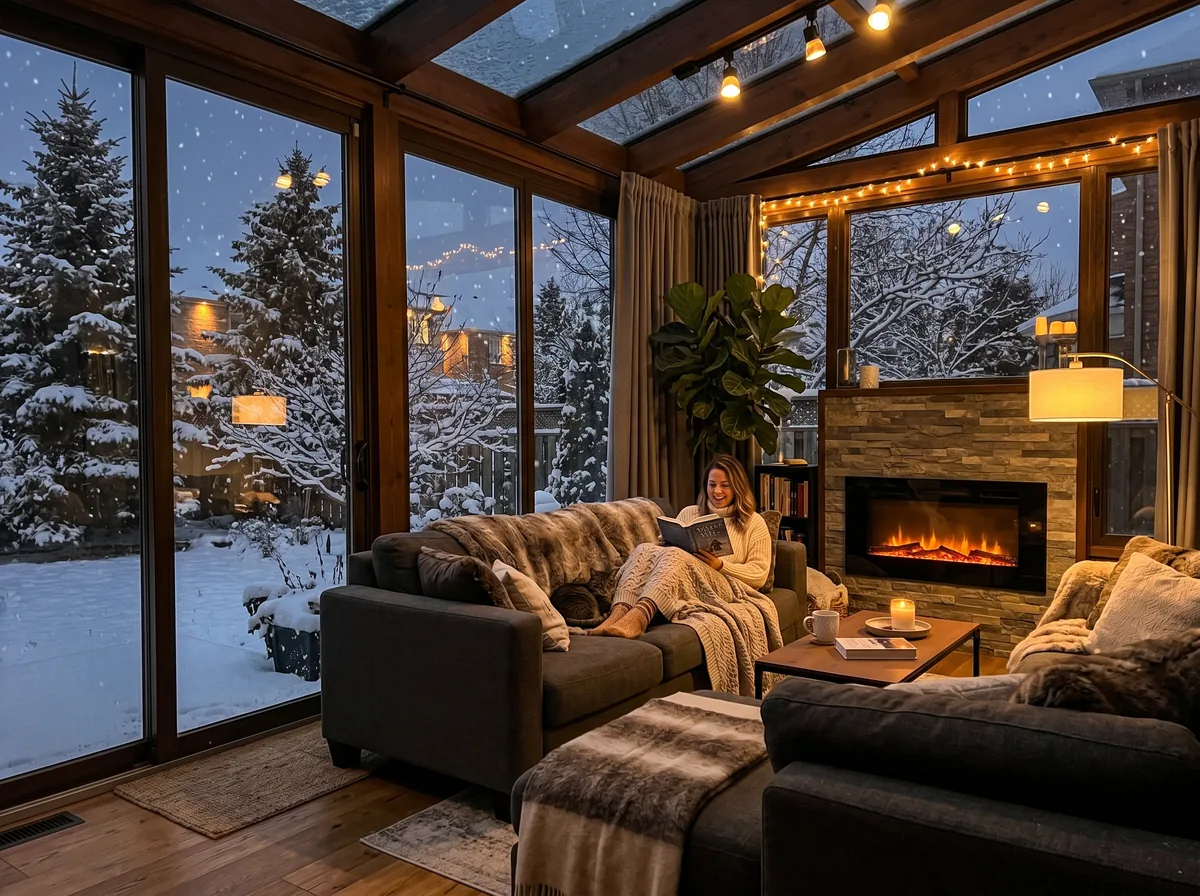
The most important technical variable is the glazing specification. Single-pane glass has an R-value of approximately R-1. Standard double-pane: R-2 to R-3. A triple-pane unit with low-emissivity coating and argon fill: R-5 to R-7. In a GTA January at -15 C, a wall that is 40 to 60 percent glass will bleed heat at a rate that makes the space uncomfortable unless you use high-performance triple-pane units.
Ontario Building Code 2024 requires effective R-20 for walls and R-31 for roof assemblies in habitable spaces in the GTA climate zone. Most four-season sunroom builders use structural insulated panels (SIPs) or advanced framing with continuous exterior insulation to achieve these values. Thermal bridges at aluminum framing are a common failure point in budget four-season rooms.
Permit Requirements Across the GTA
Both three-season and four-season sunrooms require building permits in all GTA municipalities. Permit fees typically run $2,500 to $8,000 for residential additions in this size range. Processing times vary: Toronto can take 8 to 16 weeks; Mississauga and Brampton are often faster at 4 to 8 weeks. Your contractor should pull the permit – confirm this in your contract.
Which Option Is Right for Your Home?
The honest way to choose is to be specific about how you will actually use the space. If you primarily imagine use from May through September – a three-season room serves you well at roughly half the cost. If you picture using it regularly from October through April, or want it as a formal dining room or home office year-round, a four-season room is worth the premium.
Budget is the other honest filter. A four-season room done correctly costs $75,000 minimum. A budget four-season room built with inadequate insulation is a worse outcome than a well-built three-season room – it costs more and still does not perform in winter. If your budget is $50,000 to $70,000, build a three-season room well rather than a four-season room poorly.
Working With a Contractor on Your Sunroom Project
Sunroom additions sit at the intersection of general contracting and specialized glazing and cladding systems. Quality variance between contractors in this category is high. Ask to see completed projects from the last two years – not just photos, but actual addresses where you can ask the homeowners how the space performs in January. Any contractor confident in their four-season work will give you references without hesitation.
Get at least three written quotes before committing, and make sure each quote specifies the glazing unit R-value and the wall assembly R-value. These are the numbers that determine whether you are buying a room or just paying for one.
Download Free Checklist (PDF)
Ready to Start Your Project?
Get a free, no-obligation consultation from Deomax Group. We serve the GTA and Mississauga with full-service general contracting.
Frequently asked questions
Disclaimer: The renovation costs mentioned in this blog are general industry averages and are intended for informational purposes only. Actual project costs can vary depending on the size of the space, material selections, scope of work, property conditions, and other factors. For an accurate quote tailored to your project, please contact us for a free consultation and estimate.
 Interior Renos