


 Garden Suites
 Basement Reno
 Bathroom Reno
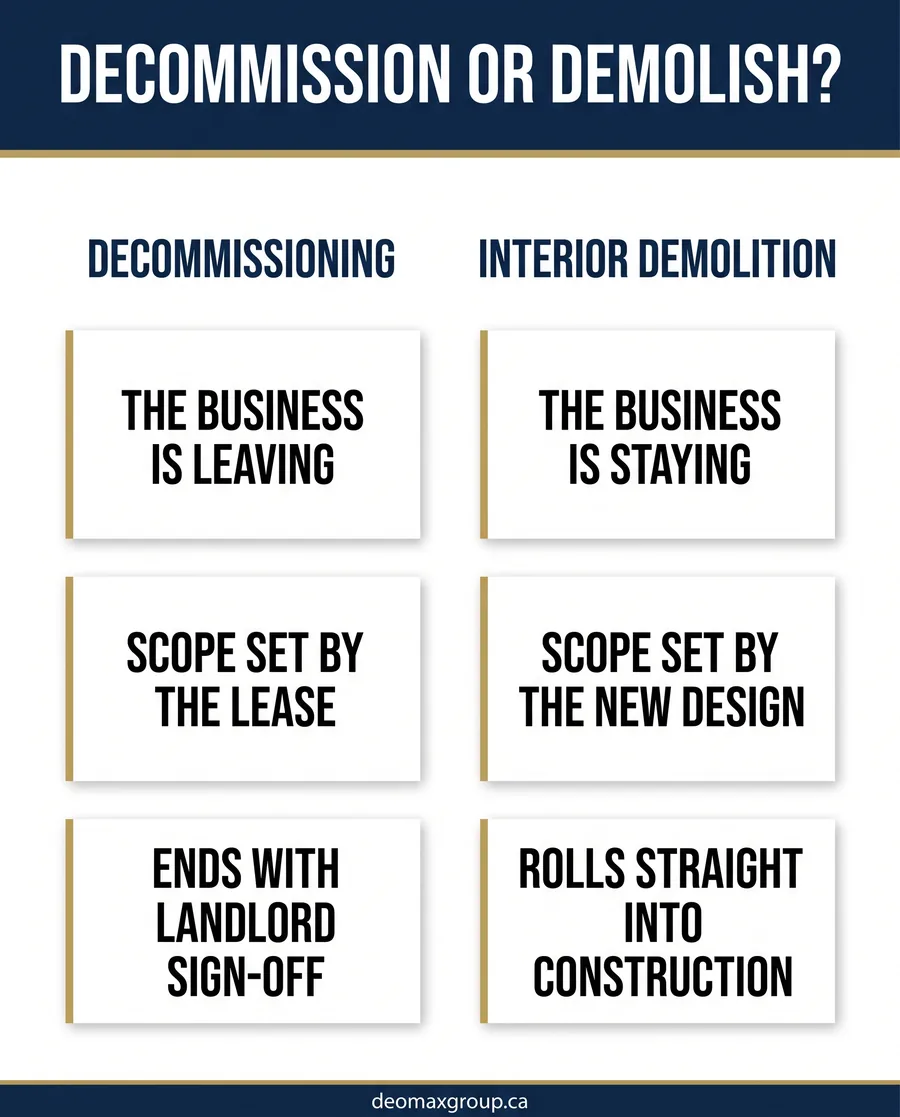
Your office lease is ending, or your space no longer fits the business, and two similar-sounding words keep coming up: office decommissioning vs. demolition. They are not the same project. One returns a leased space to the condition your landlord expects back; the other clears a space you are keeping so something better can be built in it. Our office renovation and fit-out team runs both, and which one you need falls out of one question: are you leaving this space, or staying?
Here is the difference in plain terms, side-by-side, and the decision path we walk clients through before either crew is booked.
Quick Take
Leaving at lease end: you likely need decommissioning, scoped against your lease’s restoration clause. Staying and rebuilding: you need interior demolition as phase one of the fit-out. Downsizing within the same building: often a slice of both, and the lease decides how big each slice is.
What Office Decommissioning Covers
Decommissioning is a lease-end obligation dressed up as a construction project. Most commercial leases carry a make-good or restoration clause: when you hand the keys back, the space goes back to an agreed condition, often the base building shell, sometimes the condition it was in when you moved in. The general legal backdrop for commercial tenancies in this province is Ontario’s Commercial Tenancies Act, but the obligations that matter are the ones written into your specific lease, and no two read alike.
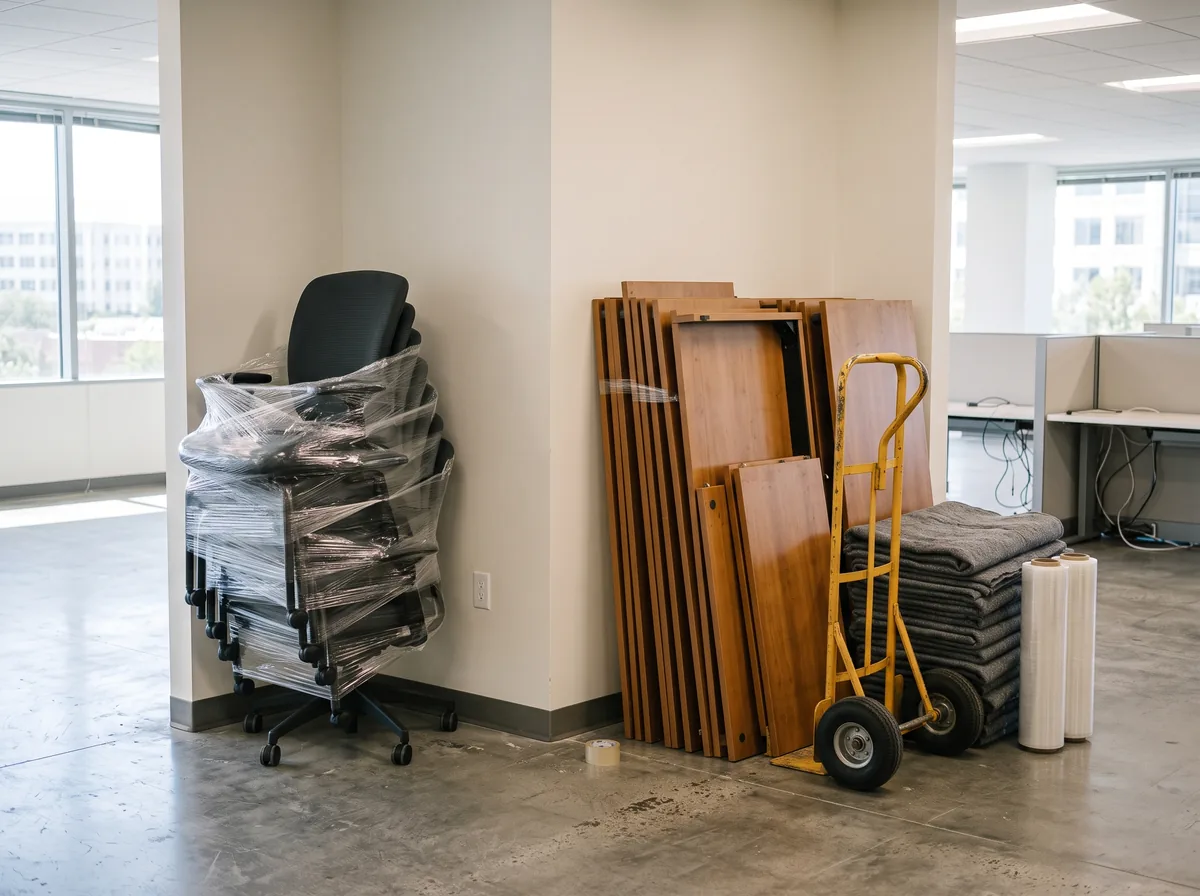
A typical decommissioning scope: workstations and furniture out (sold, donated, or recycled), partition walls and millwork removed, abandoned network cabling pulled back to the closet, signage and branding stripped, ceiling and lighting made whole, and the space broom-clean for the landlord’s inspection. The deliverable is not a beautiful space. It is a signed-off handover and a returned deposit.
What Interior Demolition Covers
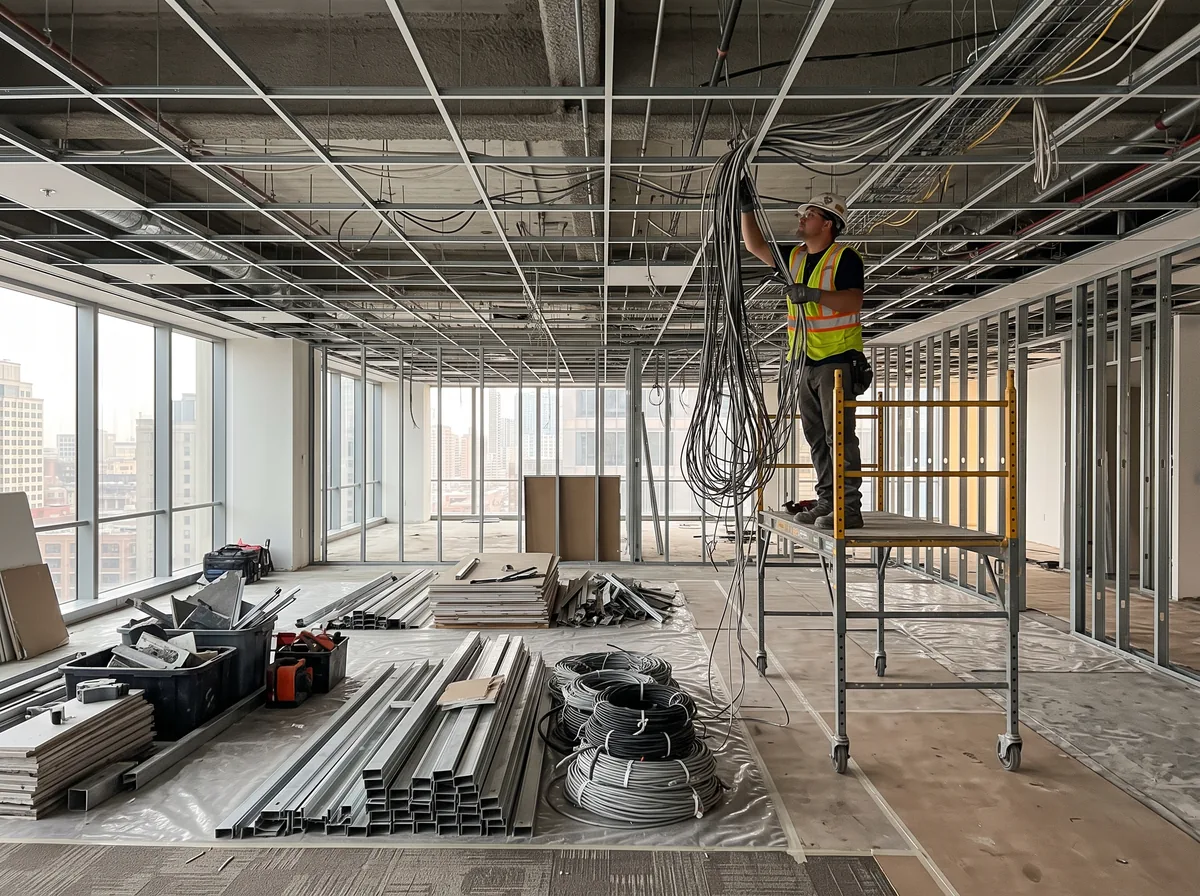
Interior demolition, strip-out if you prefer, is the opening act of a renovation. The business is staying; the space is not. Walls, ceilings, flooring, and dated services come out selectively so the new office design concept can go in without inheriting the old layout’s problems. Unlike decommissioning, nobody hands keys to anyone at the end; the same space rolls straight into construction.
The discipline in demolition is selectivity. What stays- structure, base building systems, anything the new design reuses- matters as much as what goes. A commercial demo plan drawn against the new design saves real money compared to gutting everything and rebuilding what should never have been touched.
Office Decommissioning vs Demolition Side by Side
| Decommissioning | Interior Demolition | |
|---|---|---|
| Trigger | Lease ending, relocation, downsizing | Renovation or re-fit of space you keep |
| Who sets the scope | Your lease’s restoration clause and the landlord | Your new design drawings |
| End condition | Base building or move-in condition, broom-clean | A prepared shell ready for construction |
| Sign-off | Landlord inspection and deposit release | Your own project team; work continues |
| Furniture and equipment | Central to the scope: resale, donation, recycling | Usually minor; the business often keeps its assets |
| Timing pressure | Hard deadline: the lease expiry date | Flexible: driven by the construction schedule |
Which One Fits Your Situation?
Walk the decision in three questions:
- Is the business leaving this address? If yes, it is decommissioning, and the scope conversation starts with your lease and your landlord, not with a contractor’s estimate.
- Is the business staying and rebuilding? If yes, it is interior demolition, and the scope conversation starts with the new design, what the fit-out needs cleared and what it can reuse.
- Is the business shrinking within the same building? Then the floor you give back gets decommissioned while the floor you keep may get demolished and rebuilt, two scopes, one coordinated schedule, ideally one contractor so the crews and the elevator bookings do not collide.
People Often Ask
Can we just leave the space as is and forfeit the deposit? Usually a bad trade. Deposits rarely cover a landlord’s full restoration cost, and leases commonly let the landlord do the work and bill you at their price, not yours. Pricing your own decommissioning against your actual lease language almost always beats leaving it to the landlord’s contractor. Have your lawyer confirm what your lease allows before deciding.
Five Things to Settle Before You Book Either
Whichever side of the office decommissioning or demolition line you land on, the same five items decide whether the project runs clean:
- The paper: For decommissioning, the lease’s restoration clause and any landlord fit-out records. For demolition, the new design drawings and a building permit review where the scope needs one.
- The building’s rules: Elevator bookings, working hours, and protection requirements apply to office towers the same way they do to residential ones.
- Materials assessment: Older office floors can hold designated substances; testing before strip-out is a separate, specialist step that no schedule should skip.
- The furniture plan: Resale and donation take lead time to arrange; dumpsters are the expensive last resort, not the default.
- The calendar: Decommissioning works back from lease expiry with margin for the landlord’s inspection; demolition works forward from permit and design milestones.
Good to Know
This article is general information for business owners and office managers, not legal advice. Make-good and restoration obligations are set by your specific lease, and permit and materials-testing requirements vary by building and project. Review your lease with your lawyer and confirm building requirements with your landlord or property manager before committing to a scope. Deomax Group is not responsible for decisions made solely on this article.
Download the Free Quick Guide
A one-page worksheet covering the decommissioning vs. demolition decision and the questions to settle first.
Frequently Asked Questions
The verdict: office decommissioning vs. demolition is not a contractor question; it is a lease question. Leaving means decommissioning, scoped line by line against your restoration clause. Staying means demolition, scoped against the design you are about to build. Answer “are we staying?” first, and the rest of the project plans itself.
Deomax handles both across Toronto and Mississauga office buildings, decommissioning floors for departing tenants and stripping out spaces ahead of new fit-outs, often in the same towers. Book a walkthrough of your space and we will scope it against your lease or your design, whichever applies.
 Interior Renos