


 Garden Suites
 Basement Reno
 Bathroom Reno

The job looked like a weekend: pull up the worn parquet in a 1980s Etobicoke unit, lay the new engineered floor, done. Then the parquet came up glued to a levelling compound nobody expected, the board’s renovation rules asked for an acoustic membrane spec sheet, and the service elevator was booked solid for a week. Condo flooring removal is rarely hard work, but it is layered work, which is why our Toronto condo renovation team treats the removal as its own small project, not a demo-day afterthought.
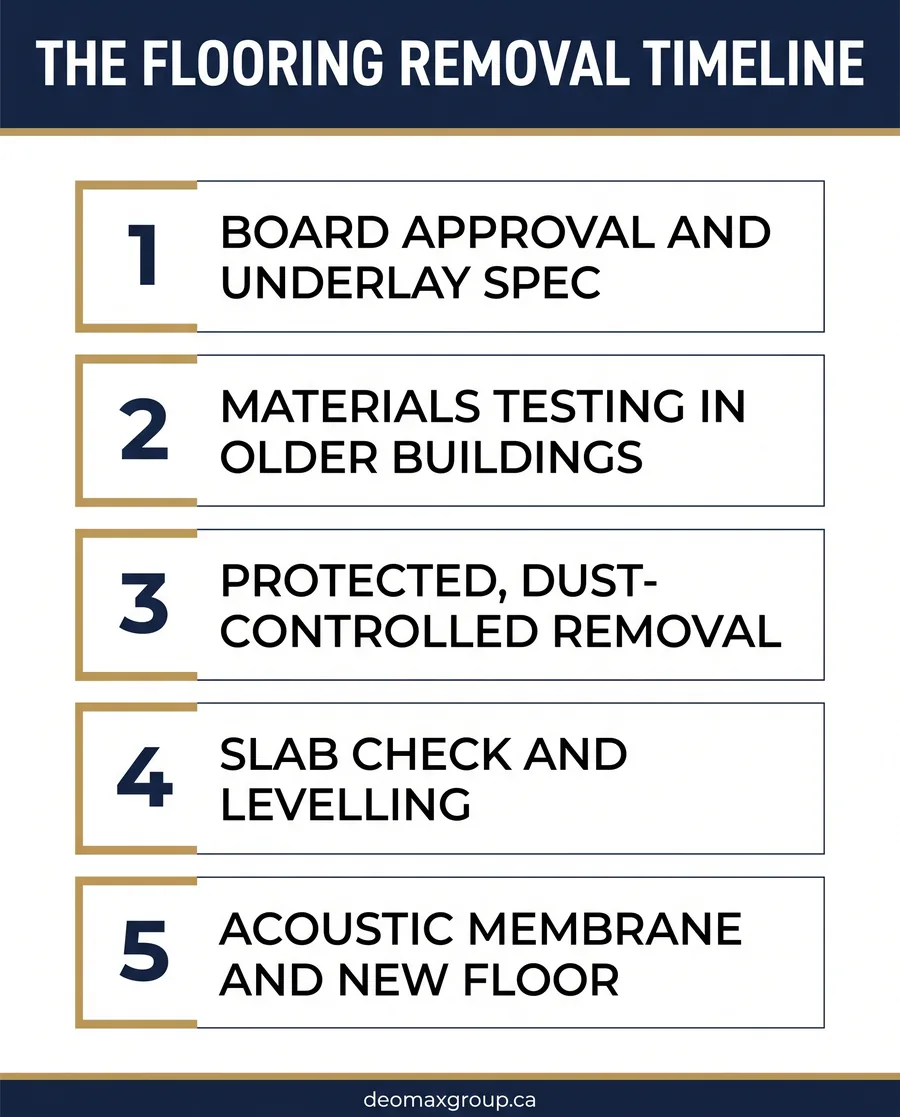
Here is the timeline of what actually happens between deciding on new floors and standing on them, told in the order it unfolds.
Before Demo Day: Approvals and Testing
Flooring is one of the most regulated renovations inside a condo, not because of the floor you remove but because of the neighbour below it. Most corporations require board approval for hard-surface flooring and specify an acoustic underlayment so footsteps do not become the downstairs unit’s problem. The Condominium Authority of Ontario’s renovation guidance explains why in-unit changes still run through the corporation. Get the approval and the required underlay spec in writing before anything is booked.
The second gate applies to older buildings: vinyl tile, sheet flooring, and the adhesives under them from earlier decades can contain designated substances such as asbestos. That is settled by lab testing before removal, through a qualified environmental consultant, and if the result comes back positive, the removal becomes a specialist abatement scope with its own rules. No schedule is worth skipping that step.
Did You Know
Many condo boards ask for the new floor’s acoustic rating before approving the renovation, because the flooring assembly, underlay included, is what protects the unit below from impact noise. Sorting that spec out upfront is usually the difference between a one-week and a one-month approval.
What Condo Flooring Removal Day Looks Like
On the day itself, the crew’s first hour is spent outside your unit: elevator pads up, corridor floor protection down, dust barrier zipped across the doorway. We cover that setup in detail by protecting condo common areas during demolition, and it applies to a one-room floor job as much as a full gut.
Inside, the method depends on what is coming up. Floating floors release quickly. Glued hardwood and parquet fight back and often need powered scrapers. Tile turns to sharp debris and fine dust, which is why the crew runs dust extraction at the tool and keeps the work zone under negative air. Baseboards come off first and get labelled if they are being reused. A typical one-bedroom’s condo flooring removal runs a day or two; fighting a stubborn glue-down can stretch it.
Under the Old Floor: What Removal Reveals
The most valuable hour of a condo flooring removal is the one right after the old floor is gone, because it is the only look anyone has had at the slab in decades. Three findings come up again and again:
- Old adhesive and levelling compound residue, which has to be scraped or ground flat so the new floor sits true.
- Slab cracks and uneven areas. Hairline shrinkage cracks are common and mostly cosmetic; anything wider or with a height difference gets photographed and assessed before it is covered up again.
- Moisture staining near balconies, bathrooms, and exterior walls is worth tracing to its source now, while the evidence is visible, rather than under a brand-new floor.
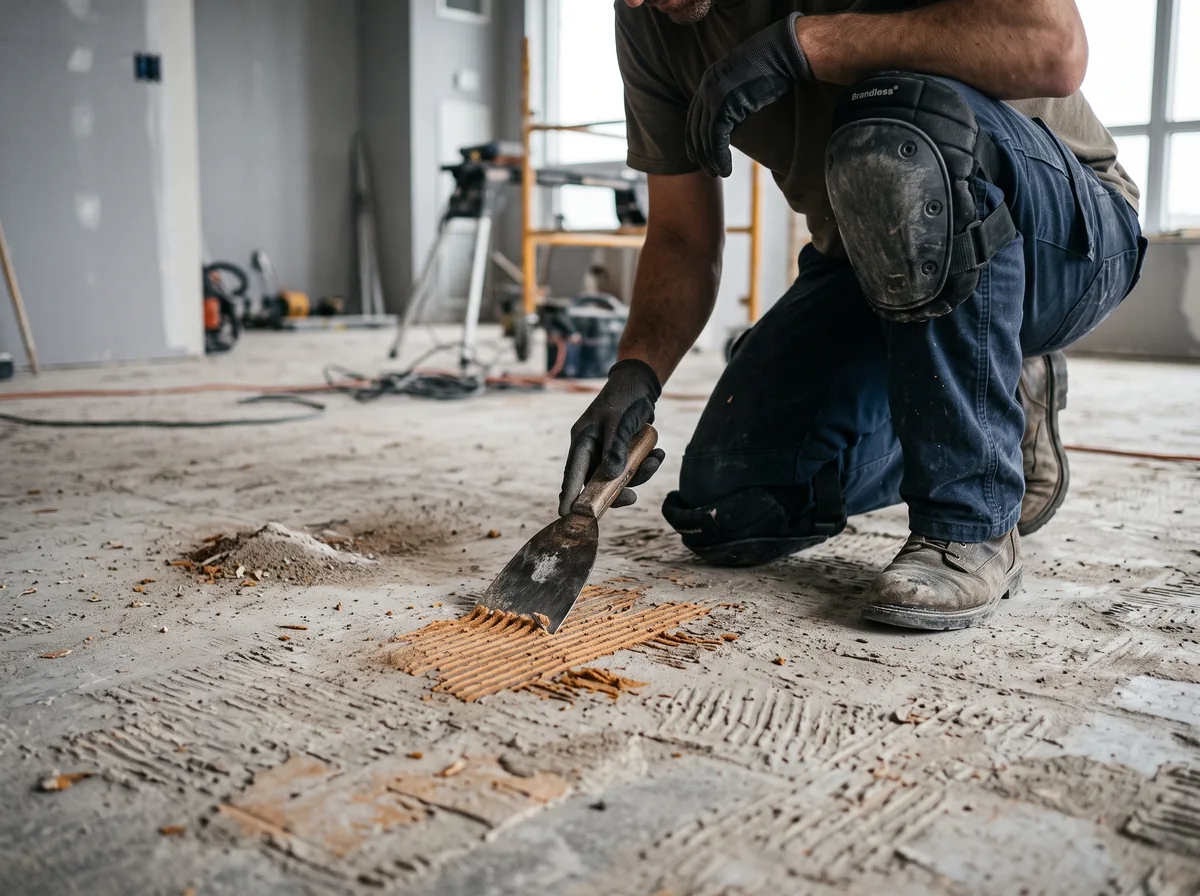
None of these discoveries are disasters. They are exactly why the removal deserves a line of its own in the schedule: the fixes are quick when they are planned for, and painful when the installer finds them the morning the new floor arrives.
Pro Tip
Ask your contractor to photograph the entire slab while it is bare and send you the set. If a warranty question about the new floor ever comes up, dated photos of the prepared surface are the documentation that settles it.
Where the Old Floor Goes
A floor that took an afternoon to break up still has to leave the building through the same booked elevator as everything else. Debris travels in lidded bins or wrapped loads, never loose on an open cart, and the building’s schedule dictates the rhythm: a crew that misses its elevator window stacks bagged tile inside your unit overnight, not in the corridor. Clean wood and metal transition strips can go to recyclers rather than the bin, and some engineered products have take-back programs worth a phone call.
Getting the Slab Ready for the New Floor
Removal ends where installation prep begins, and the handoff is where good floors are made. The sequence our crews run: grind or scrape the residue flat, vacuum to bare concrete, check flatness with a straightedge and fill the low spots with leveller, then lay the acoustic membrane the board approved back in step one. The new flooring itself sits in the unit acclimatizing while all of that happens, most manufacturers want their product living at room conditions for days before installation, and the spec sheet’s number is the one that counts.
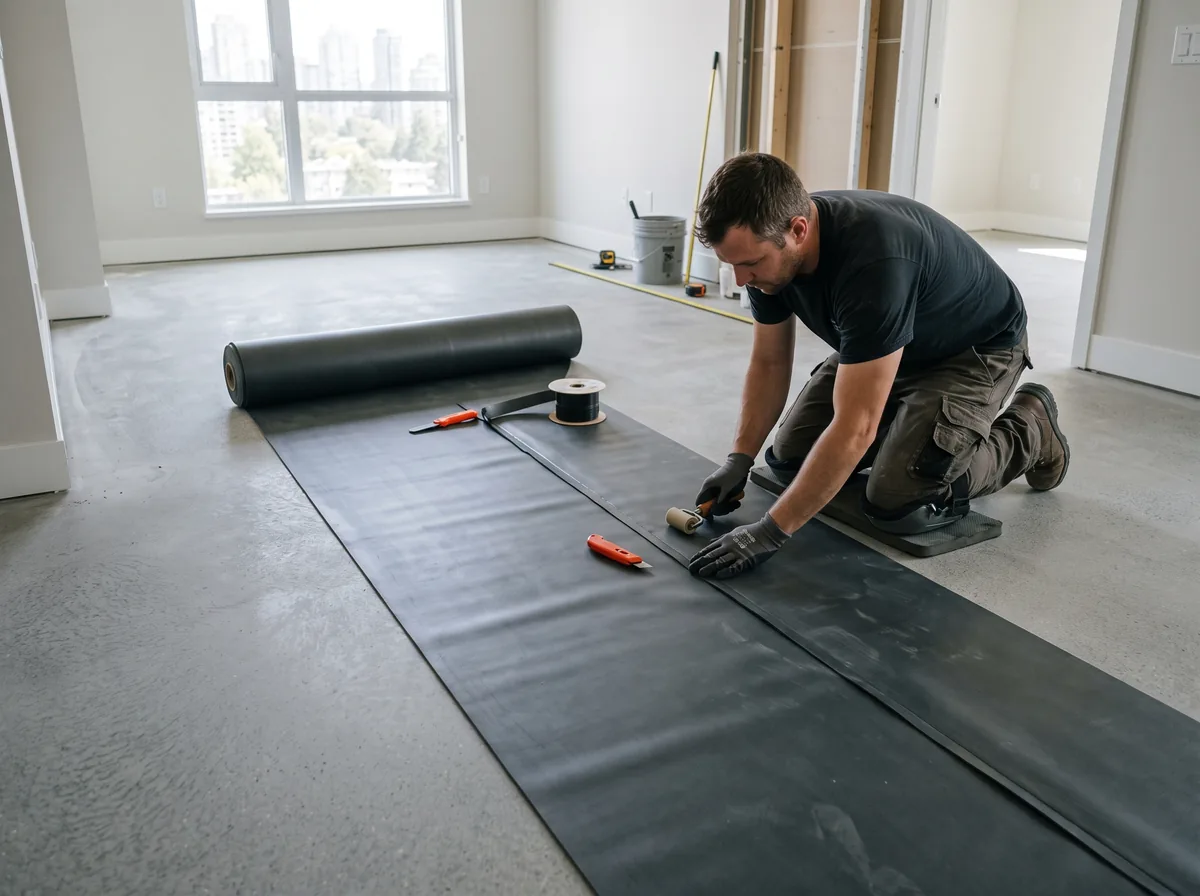
Done in that order, the new floor goes down on a flat, quiet, documented base, and the removal phase you barely noticed is the reason it feels solid a decade later.
Good to Know
This article is general information for condo owners, not engineering or safety advice. Board approval requirements, acoustic specifications, and materials-testing obligations vary by corporation and building age. Confirm your building’s rules with your property manager, and have suspect materials tested by a qualified environmental consultant before any removal. Deomax Group is not responsible for decisions made solely on this article.
Download the Free Quick Guide
A one-page timeline of the approvals, testing, and prep steps that come before your new condo floor.
Frequently Asked Questions
If new floors are on your list this year, start with three moves:
- Request your building’s renovation rules and the acoustic underlay requirement in writing.
- In an older building, book materials testing before anyone quotes the removal.
- Have the removal and slab prep scoped as their own line items, so surprises under the old floor are planned work, not change orders.
Deomax handles condo flooring removal, slab prep, and installation as one scope across Toronto and Etobicoke. Book a site visit and we will look at what is under your floors before anyone promises you a weekend job.
 Interior Renos