


 Garden Suites
 Basement Reno
 Bathroom Reno
The choice between a walk-in shower and a wet room really comes down to one core question: do you want to waterproof one specific corner of the bathroom, or the entire room? A walk-in shower keeps the water strictly inside a defined, usually glass-enclosed zone. A wet room turns the entire floor into the shower, utilizing a single drain with no step-in curb. That one structural difference drives everything else, from the overall cost to how your bathroom upgrade is actually built.
For most homeowners in Toronto and Mississauga, the walk-in shower is the safe, highly resale-friendly choice. The wet room certainly wins on accessibility and delivers a clean, spa-like aesthetic, but it demands significantly more from your budget and your waterproofing methods. Here is how to confidently tell which option fits your home best.
Quick Take
Pick a walk-in shower for most standard bathrooms and for the widest possible resale appeal. Choose a wet room when you want full accessibility, a very small footprint pushed to its absolute limit, or a high-end seamless look, provided you have the budget for whole-room waterproofing done correctly.
The Quick Verdict
If you are renovating a standard family bathroom and want the strongest financial return when you eventually sell the house, the walk-in shower is almost always the answer. Potential buyers instantly understand it, it costs less to build, and a glass enclosure reliably keeps the rest of the room perfectly dry. It is the default design choice for a very good reason.
The wet room truly earns its place in two specific situations: when someone in the home needs step-free roll-in access, or when you are working with a tiny footprint where losing the shower walls actually makes the space feel larger. Beyond those two scenarios, it is a personal style and comfort choice, not a strict value one.
What Each Option Actually Is
Walk-In Shower
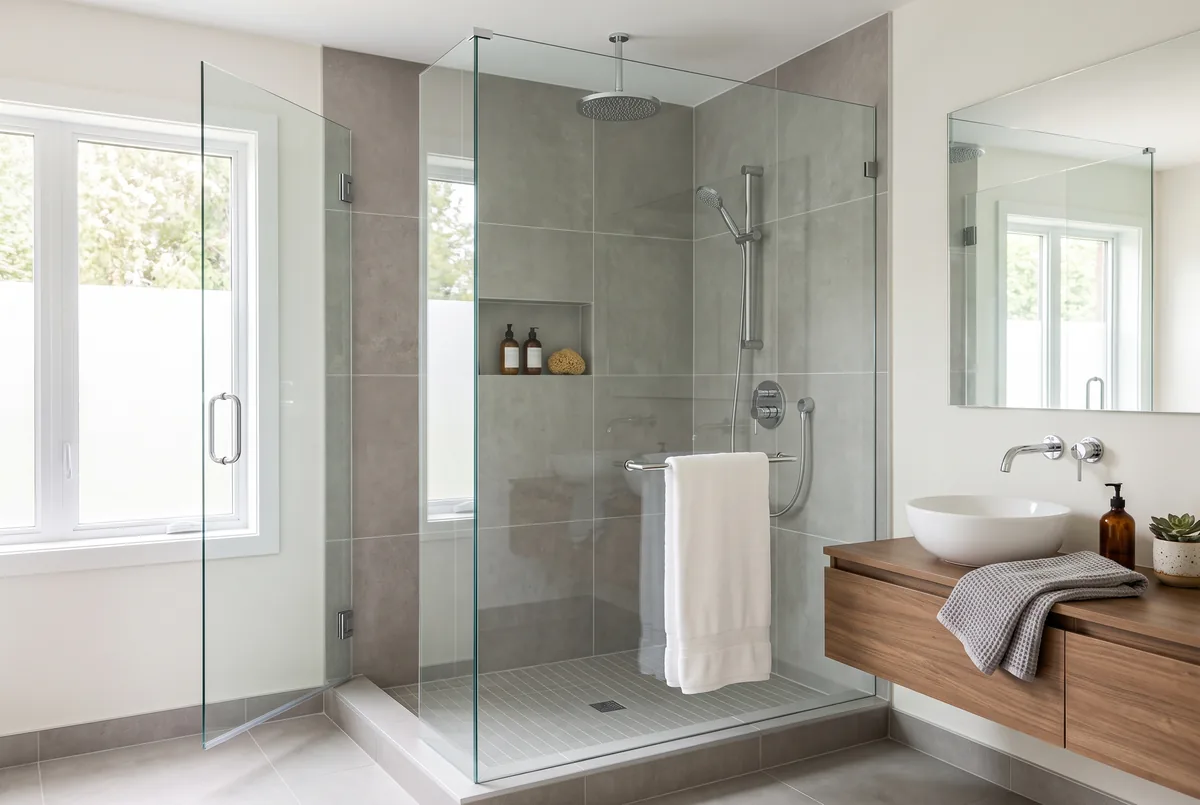
A walk-in shower is an enclosed shower area you step into without opening a traditional door, or one designed with a single fixed glass panel. It usually features a low tiled curb or a slight threshold that keeps water securely inside the shower zone. The rest of the bathroom floor stays completely dry and can use ordinary flooring materials. Only the dedicated shower area requires full waterproofing.
Wet Room
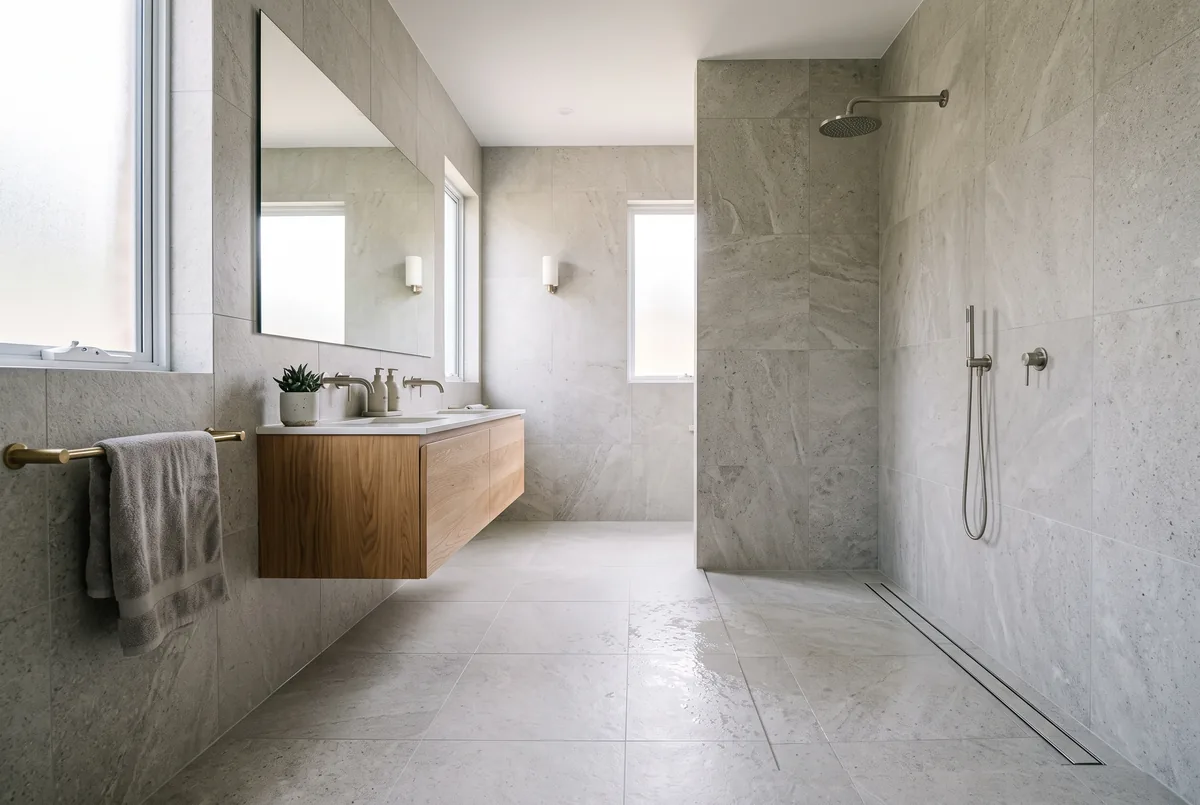
A wet room is a fully waterproofed, tanked bathroom where the shower is completely open to the room, featuring no curb and no glass enclosure. The entire floor slopes gently toward a drain, and every single surface that could potentially get wet is sealed tight. It is the most seamless, open look you can possibly build. It is also the most demanding to waterproof, because a failure anywhere in the room will leak directly into the structure below.
People Often Ask: Does a Wet Room Make the Rest of the Bathroom Wet?
Not if it is built and used properly. A true wet room is designed so the primary shower spray stays in a controlled zone near the drain. A fixed glass splash panel is often added to protect the toilet and vanity area from overspray. The entire floor is waterproofed as a safety net, not because the whole floor gets soaked daily. Good drainage placement and a slight floor slope easily keep the dry areas dry in normal use.
Walk-In Shower vs. Wet Room: A Side-by-Side Look
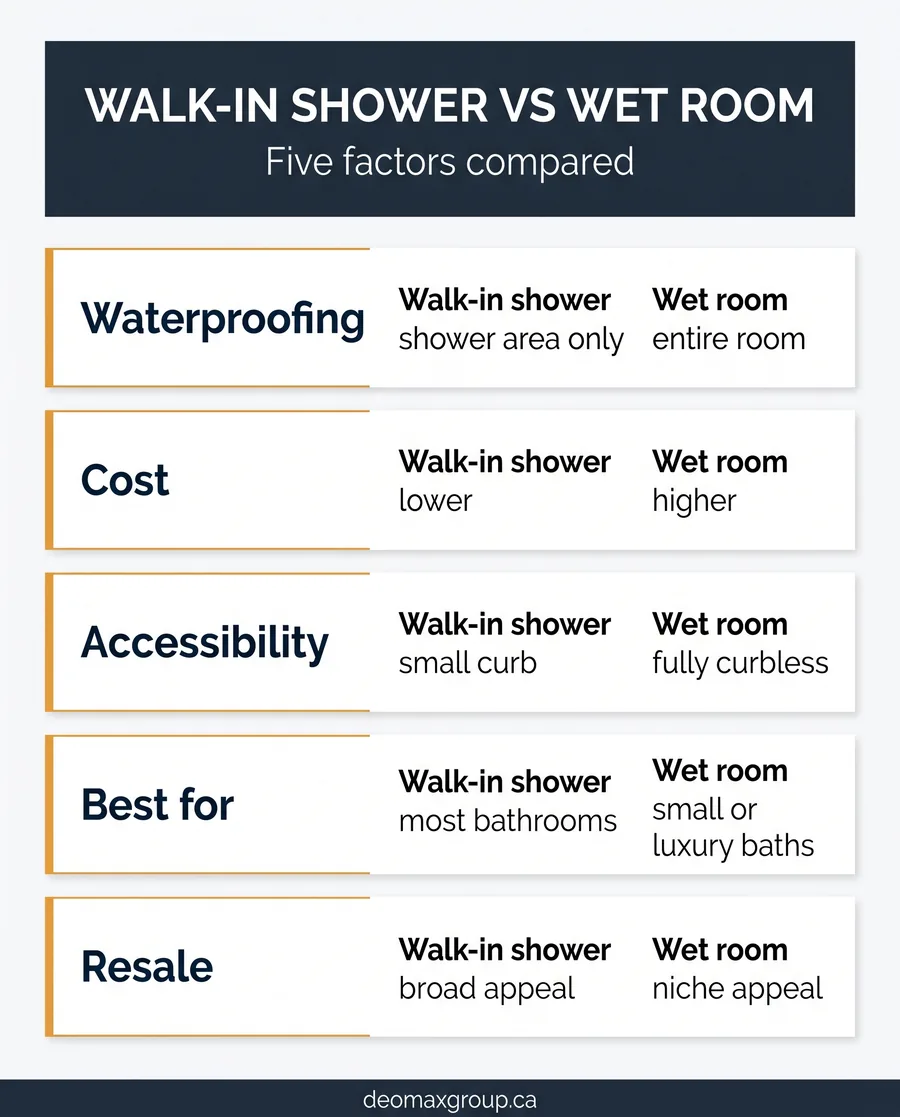
Here is the direct comparison that truly matters when you are choosing between the two for a GTA bathroom renovation.
| Renovation Factor | Walk-In Shower | Wet Room |
|---|---|---|
| Waterproofing | Shower area only | Entire room tanked |
| Relative Cost | Lower | Higher, requires much more labour |
| Accessibility | Low curb to step over | Fully curbless, roll-in capability |
| Cleaning | Glass requires a squeegee | Open floor, incredibly easy to wipe down |
| Best For | Most standard family bathrooms | Small footprints or accessible baths |
| Resale Appeal | Broad, familiar to most buyers | Niche, a love-it-or-hate-it feature |
The overall pattern is clear. The walk-in shower is the lower-risk, lower-cost, and broadly appealing option. The wet room proudly trades some of that safety and budget for supreme accessibility and a stunningly clean look. Neither is definitively better than the other; they simply solve completely different design problems.
The Cost Reality
A wet room almost always costs more than a walk-in shower built in the exact same space, and the core reason is the waterproofing. Sealing the entire floor and the lower walls, getting the floor slope absolutely perfect, and installing the drain correctly takes more materials and demands much more skilled labour. A walk-in shower waterproofs a significantly smaller area, so there is simply less of that tedious work required.
The other major cost driver is what sits completely hidden under the floor. Setting the correct slope to a linear drain and keeping the finished floor height perfectly flush can mean adjusting the subfloor or the structural joists, especially in older Toronto and Etobicoke homes with aging floor structures. That is completely invisible work that will definitely show up on the final invoice. A proper, detailed quote from an experienced interior renovation team should break out the waterproofing separately so you can clearly see what you are paying for.
Save Your Money
Do not cut corners on waterproofing just to save on either option. A failed shower pan or a leaking wet-room floor can rot the subfloor and joists, ultimately costing far more than the original job to repair. If your budget is tight, choose the smaller-footprint walk-in shower and confidently put your money into a properly tanked shower zone rather than a large wet room done cheaply.
Which One Fits Your Home?
Choose a walk-in shower if you have a standard bathroom, you want the safest resale value possible, and you genuinely like the idea of keeping most of the floor dry with ordinary flooring materials. It is the sensible default for the vast majority of GTA renovations, and it pairs beautifully with almost any style.
Choose a wet room if accessibility matters right now or very soon, if your bathroom is small enough that removing the enclosure genuinely opens it up, or if you are after a high-end, seamless spa look and have the budget to waterproof it perfectly. If you are converting an old bathtub, our detailed guide covering the reasons to convert your bathtub to a shower is a very good next read.
Did You Know?
A curbless wet room can actually make a small bathroom look noticeably larger. The eye reads one continuous tiled floor instead of a room broken up by a raised shower base and a bulky curb. It is one of the very few renovations where physically removing something- the enclosure visibly adds a sense of space.
Download the Free Decision Guide
A one-page decision matrix comparing a walk-in shower and a wet room, so you can pick the right option with complete confidence.
Frequently Asked Questions
Please note: This article is for general guidance only. Construction costs, products, building codes, and best practices change constantly. Deomax Group is not liable for outcomes from actions taken based on this content. Always confirm your permit and plumbing requirements against the Ontario Building Code and with your municipal building department before you begin.
Whether you land on a reliable walk-in shower or an accessible wet room, the build quality of the waterproofing is what you are really paying for. Deomax Group designs and builds expert bathroom renovations in Mississauga, Toronto, Milton, and Etobicoke. Book a free quote today, and our team will thoroughly assess your space, your plumbing, and your budget, then recommend the option that actually fits your home.
 Interior Renos